
Functional Blood Chemistry: What I’m Learning About Why “Normal” Labs Don’t Tell the Full Story
Over the past several weeks, I’ve been spending time immersed in a functional blood chemistry analysis course, and it has been both eye-opening and incredibly rewarding. While I’ve been familiar with functional lab ranges and patterns for years, this formal training is helping me deepen and refine my ability to recognize how much information is hidden in plain sight within routine lab results.
Rather than simply asking whether a marker falls inside a broad “normal” range — which is often based on a population average of people who may already be unwell — functional analysis looks at patterns, relationships, and optimal ranges. This perspective helps uncover what the body may be signaling long before symptoms fully develop.
At a High Level, I’ve Been Learning How To:
1. Identify Patterns
Individual markers are rarely islands; they work in concert. Patterns can point to:
Subtle Inflammation Trends: Observing patterns across markers—like shifts in white blood cell types or changes in proteins such as albumin and globulin—that can hint at low-grade inflammation.
Blood Sugar Dysregulation: Spotting shifts in metabolic health even when fasting glucose is technically "normal."
Nutrient Insufficiencies: Identifying early needs for B12, Folate, or Iron by looking at red blood cell indices like MCV and MCH before anemia ever sets in.
Chronic Stress Signals: Noticing how the body adapts its physiology based on adrenal and electrolyte patterns.
2. Understand System Interactions
Everything is connected. I’m learning how thyroid function, blood sugar regulation, immune activity, and detox pathways influence one another. When one gear shifts, the others must compensate.
3. View Lab Work as a Story
Lab results aren’t just static numbers; they are a narrative of how your body is adapting to its environment. By reading this story, we find opportunities to support function before major issues arise.
A good example of this can be seen in blood sugar regulation.
Blood Sugar: Two Functional Perspectives
One of the most powerful aspects of functional analysis is its ability to highlight early metabolic shifts. By narrowing the focus to "Functional Ranges," we can see where the body is struggling long before it reaches a clinical diagnosis.
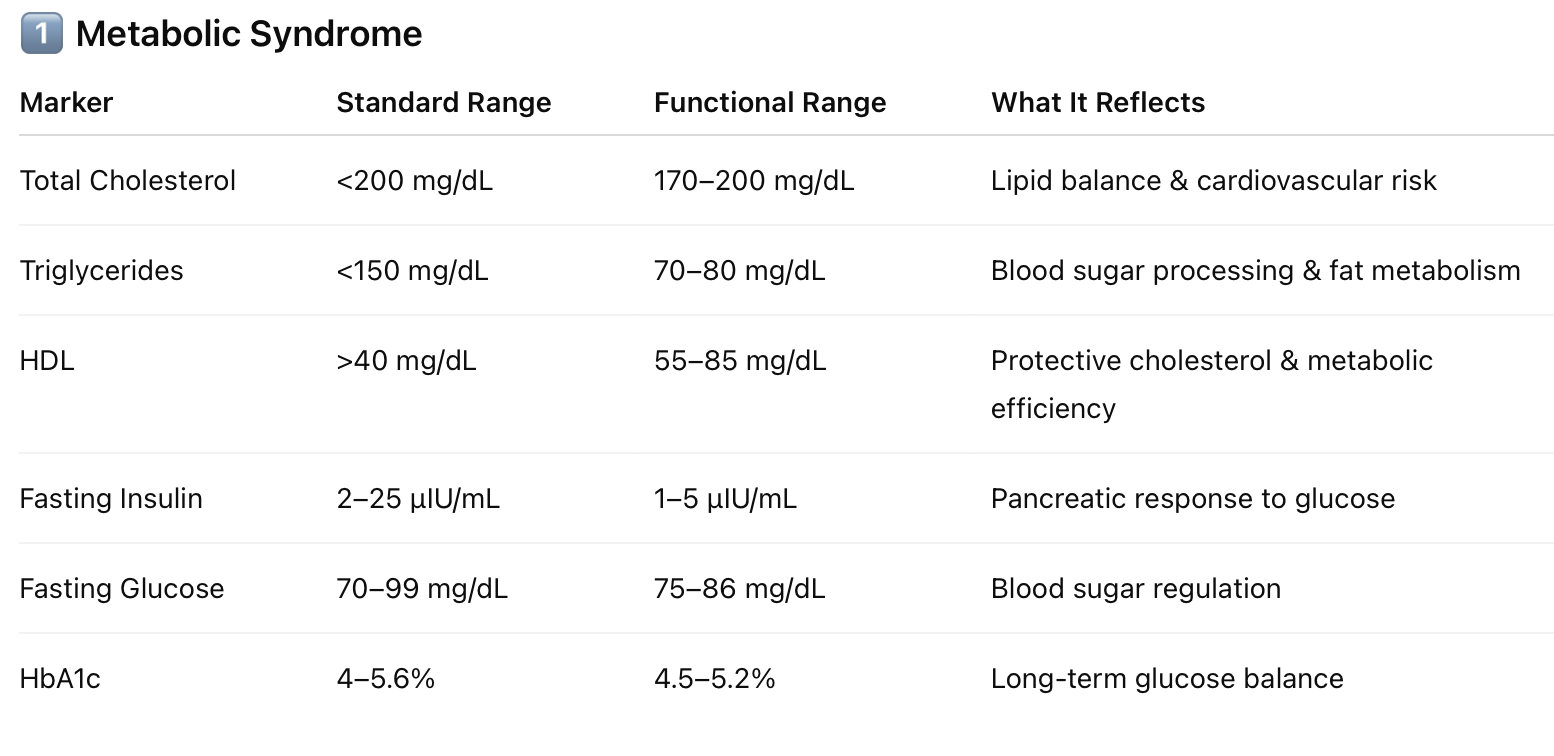
1. Metabolic Syndrome
Metabolic Syndrome is a cluster of markers that reflect how the body manages energy and systemic inflammation. For example, while a "standard" range for Triglycerides might go up to 150 mg/dL, a functional range looks for 70–80 mg/dL to ensure fat metabolism is truly efficient.
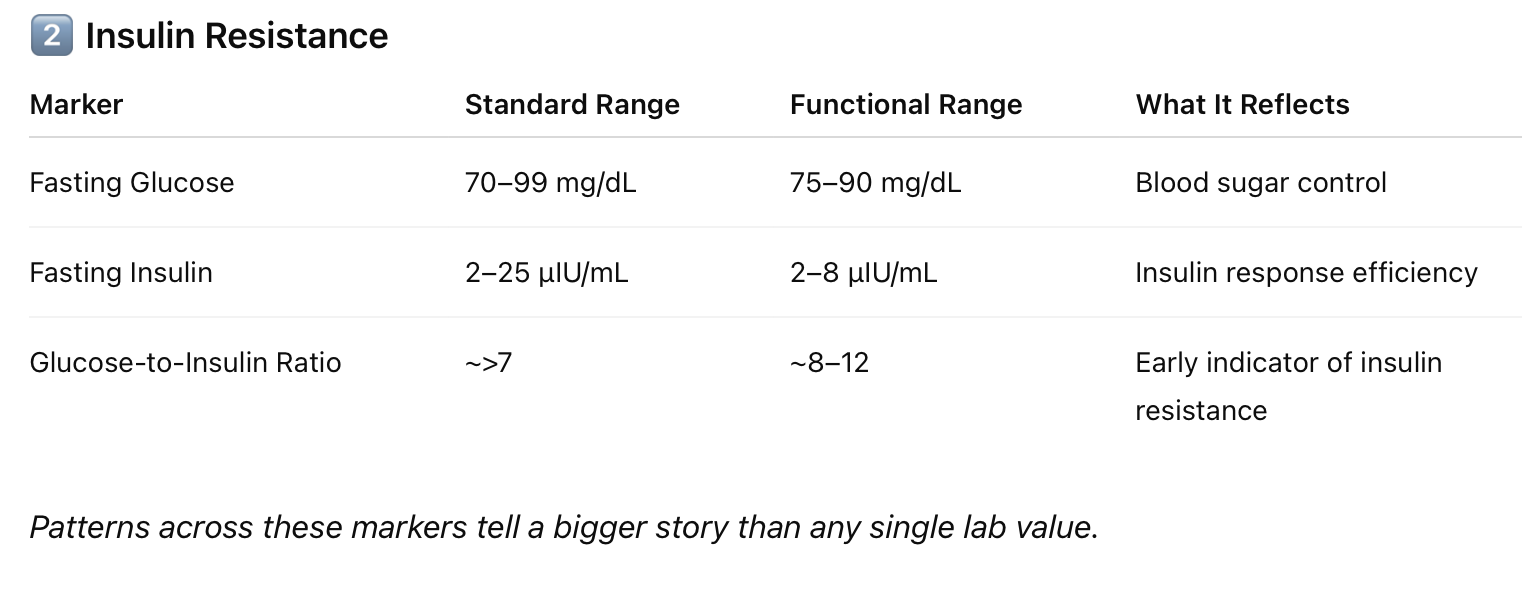
2. Insulin Resistance
Insulin resistance occurs when cells begin "ignoring" insulin, forcing the pancreas to work harder. Functional analysis catches this early by looking at the Glucose-to-Insulin Ratio. While a standard view might just look for a ratio over 7, a functional perspective seeks a tighter 8–12 range as an early indicator of resistance.
Looking Ahead: Using Labs as a Preventive Lens
The power of this approach is the shift from reacting to disease to proactively building health. By looking at optimal ranges—not just whether a marker is "flagged" high or low—we can see early shifts in physiology. This creates a window of opportunity to support the body when it is most resilient.
Working with a knowledgeable functional provider helps translate these patterns into personalized strategies. The goal isn’t perfection; it’s clarity and direction, so small, consistent changes can have a massive impact over time. If you aren’t in a position to hire a functional practitioner today, you aren’t stuck. You can still use the "story" your body is telling to make informed choices.
1. Become a Student of Your Own Data
Most standard doctors will run these labs annually. Instead of just looking for the "H" or "L" flags on your results, look at your numbers against the functional ranges we discussed above.
Is your Fasting Glucose creeping toward the 90s?
Are your Triglycerides climbing above 100?
Even without a specialized report, noticing these trends early shows where small lifestyle changes can make a big difference.
2. Focus on "The Big Three" (No Lab Required)
The beauty of metabolic health is that the most powerful "levers" are free. You don’t need a provider to tell you to:
Front-load your day with protein: This stabilizes your blood sugar from the first bite, preventing the "rollercoaster" effect that leads to late-day crashes.
Prioritize the "Post-Meal Walk": Think of your muscles as a sponge for glucose. Using them after you eat helps clear sugar from your bloodstream naturally.
Audit your sleep hygiene: If your sleep is trashed, your insulin sensitivity will be too. Start by getting 15 minutes of natural sunlight in the morning to help regulate your cortisol and melatonin cycles.
3. Use Wearable Tech
If you want real-time feedback, tools like Continuous Glucose Monitors (CGMs) or even simple fitness trackers that monitor Heart Rate Variability (HRV) can help you see how your specific body reacts to stress and certain foods.
Why This Approach Matters
What I love most about this approach is how it shows that our bodies are constantly communicating. Labs aren’t just numbers—they’re signals that, when interpreted thoughtfully, can reveal opportunities to support health and longevity.
I’m still deep in the learning process, but I’m excited that, down the road, this knowledge will allow me to help others move beyond “normal” lab results and truly optimize their health. Along the way, I’ll continue sharing glimpses from the course, offering insights that anyone curious about their own health can use.
This journey has been a powerful reminder of how empowering knowledge can be. The more we understand how the body is designed to function, the better equipped we are to make choices that support long-term wellness.
Disclaimer: The content in this post is for educational purposes only and is not intended as medical advice. Always consult a qualified healthcare provider before making changes to your health routine, interpreting lab results, or starting new supplements or treatments.
